

Can Concrete Be Repaired in Winter?
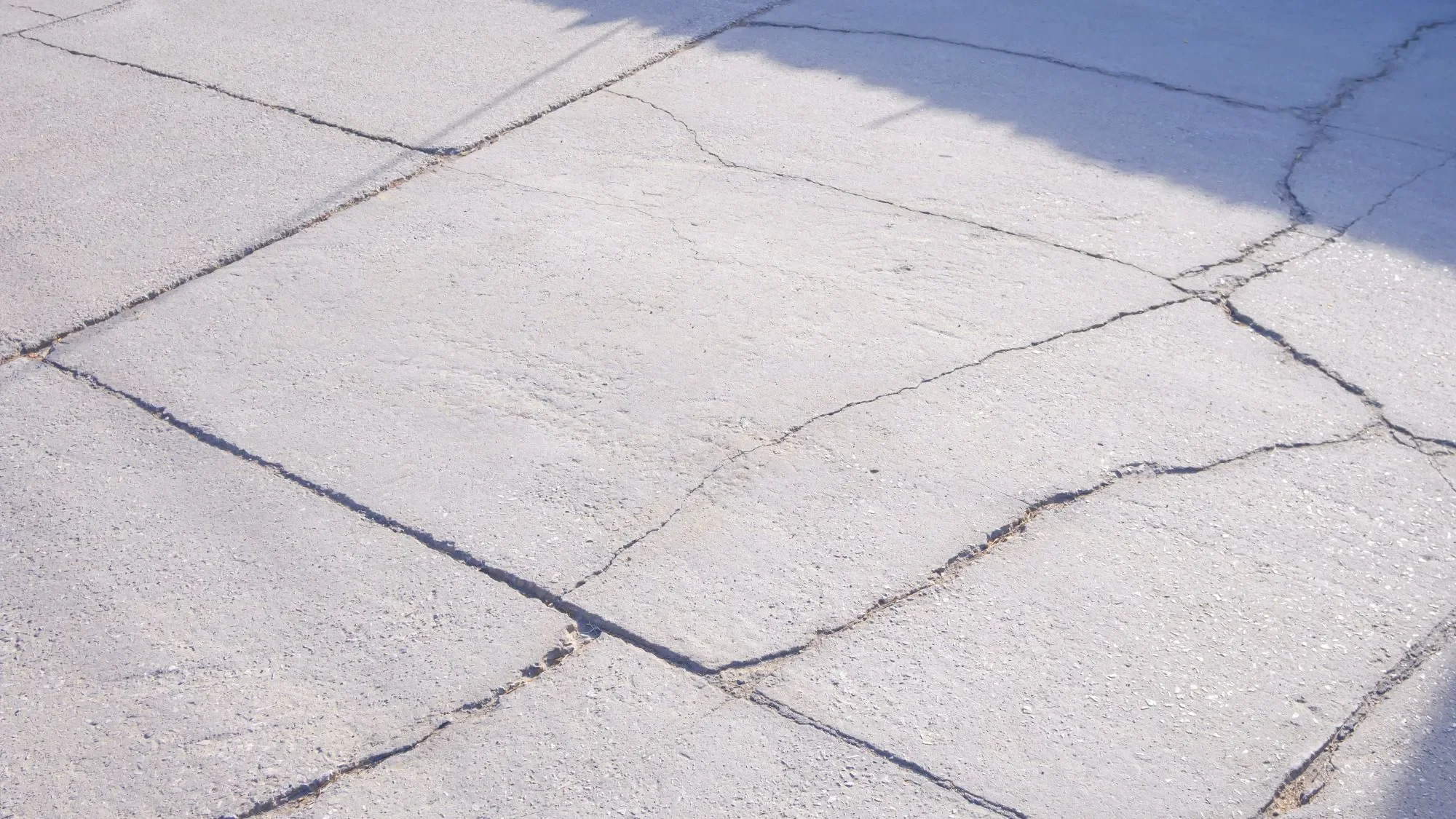
Concrete can be repaired in winter when the repair method and work area support proper preparation, application, and curing. Interior repairs and urgent safety work may proceed during cold weather, while exterior resurfacing, coatings, and larger replacements often need warmer conditions. Aurum Concrete assesses the damage and site conditions to determine whether winter work, temporary stabilization, or spring scheduling is appropriate.
What Winter Changes About Concrete Repair
Cold weather affects how repair products bond, cure, and develop strength. Temperatures below a product’s permitted range can prevent proper bonding or strength development, not simply extend the curing period. Frozen, frost-covered, or salt-contaminated concrete also prevents reliable surface preparation.
Air temperature alone does not determine whether work can proceed. The temperature of the concrete, repair material, and underlying substrate must remain within the selected product’s requirements before, during, and after application. Overnight lows, moisture, condensation, and curing duration are part of that decision.
A product described as suitable for cold weather is not suitable at every winter temperature. Its technical requirements still establish the permitted ambient, material, and substrate temperatures. Heating, insulated blankets, temporary enclosures, and moisture control may create acceptable conditions, but only when they protect the complete repair for the required curing period.
Repairs That May Be Possible in Cold Weather
Winter work is most practical in controlled interior environments, for localized repairs that can be protected, or when an immediate hazard cannot safely remain until spring. The concrete must remain accessible enough to inspect and prepare properly.
The damage must also be suitable for the proposed repair. Cold-weather procedures cannot compensate for unstable surrounding concrete, unresolved movement, or a repair method that does not address the underlying condition.
Interior Concrete Repairs
Repairs inside heated buildings may proceed during winter when the concrete surface and work area remain controlled. Common examples include localized repairs to basement floors, parkades, commercial floors, and interior foundation walls.
The location must be evaluated rather than assumed to be warm enough. Unheated garages, loading areas, exterior-facing walls, and spaces near frequently opened doors can have cold concrete even when the building itself is heated.
Interior work may require dust containment, ventilation, and controlled access. Active water entry also affects material selection because the repair system must be appropriate for the moisture conditions at the crack or surface.
Trip Hazard and Safety Repairs
Raised edges, broken steps, spalled walkways, and uneven slabs can create hazards that should not automatically be left until spring. Winter work may include grinding a raised edge, removing loose concrete, or applying a compatible localized patch when the surface can be properly prepared.
Grinding is unsuitable if it would remove too much concrete, expose reinforcement, or leave an unsafe slope. A temporary patch also requires sound repair boundaries and adequate adhesion. Winter conditions do not make preparation optional simply because the repair is intended to be temporary.
Barriers, warning markings, and access restrictions may be used when concrete work cannot proceed safely. These measures reduce exposure to the hazard but do not repair or stabilize the damaged concrete.
Temporary Crack or Surface Protection
Temporary protection may limit water entry or prevent loose surface material from worsening before permanent work can be completed. Possible measures include compatible temporary sealants, localized patching, covers, or controls that redirect water away from the damaged area.
Temporary protection should not conceal active movement, trap water, or interfere with the planned permanent method. Materials that leave residue or require extensive removal can add preparation work later.
The protected area should be checked after significant temperature changes. Earlier reassessment is appropriate if the material separates, leakage returns, the crack widens, or the surrounding concrete begins to move.
Repairs That Often Need Warmer Conditions
Repairs requiring broad surface preparation, moisture-sensitive materials, fresh concrete placement, or extended curing are difficult to complete outdoors during an Edmonton winter. Warmer conditions usually provide a more practical application and curing window without the added complexity of enclosures and continuous heating.
Winter work may still be possible under a designed cold-weather procedure. The repair system, project size, exposure, available site controls, and required protection period determine whether that approach is practical.
Resurfacing and Coatings
Resurfacing materials and coatings depend on a properly prepared substrate and controlled application conditions. Frost, condensation, deicing residue, and excess moisture can prevent bonding or affect the finished surface.
Many systems require the concrete to remain within specific temperature and moisture limits throughout application and curing. Surface temperature may also need to remain above the dew point to prevent condensation. A mild daytime temperature is insufficient if the surface freezes or becomes damp overnight.
Exterior resurfacing and coating work is generally better scheduled for a stable weather period that meets the selected system’s requirements. Temporary heating may be practical in an enclosed area, but maintaining uniform conditions across an exposed driveway, walkway, or patio can be difficult.
Exterior Formwork and Larger Repairs
Exterior section replacement, steps, walls, and other formed repairs involve demolition, base preparation, reinforcement, concrete placement, finishing, and curing. Snow-covered work areas, frozen ground, and rapidly falling temperatures affect each stage.
New concrete should not be placed over an unstable frozen base that may settle after thawing. The supporting area may need to be thawed, removed, or prepared under an appropriate cold-weather procedure before placement begins.
Fresh concrete must then be protected from freezing while it develops the required strength. Heated enclosures, insulated blankets, warmed materials, and temperature monitoring may be needed. These controls must maintain the required concrete, substrate, and curing conditions across the full repair area, not simply raise the nearby air temperature.
Larger winter repairs may proceed when structural or safety conditions make delay unacceptable. Non-urgent work is generally more practical during a suitable spring or summer weather window.
Temporary Repair vs Permanent Repair
A temporary repair manages a condition until the complete repair can be performed. A permanent repair is intended as the full repair scope, but the term does not guarantee indefinite performance. Its service life still depends on movement, drainage, exposure, maintenance, and the condition of the surrounding concrete.
Purpose: Temporary work controls an immediate safety, moisture, or deterioration concern. Permanent work restores the affected area using a method suited to the identified damage.
Scope: Temporary work is limited to short-term protection. Permanent work may involve removal, injection, grinding, resurfacing, slab lifting, drainage correction, or replacement.
Site conditions: Temporary measures may be selected when winter conditions prevent complete preparation or curing. Permanent work requires conditions that support the entire repair system.
Expected service: A temporary material has a defined interim purpose and should not be expected to perform like a completed repair.
Follow-up: The temporary measure should have a planned reassessment point. Its removal or compatibility with the permanent repair should be established before it is installed.
Temporary work is worthwhile when it reduces a current risk without compromising the eventual repair. It is not necessary for every minor defect, particularly when the concrete remains stable and the area can be monitored safely.
When Waiting Until Spring Is Risky
Waiting becomes risky when damaged concrete creates a trip or falling-material hazard, allows active water entry, or shows evidence of continued movement. Significant vertical displacement, widening cracks, exposed reinforcement, and loose concrete require assessment before the next suitable repair season.
Suspected movement in a load-bearing wall or structural component requires evaluation by a qualified concrete contractor. A structural engineer may also be required when the cause, load capacity, or appropriate structural repair cannot be established through a concrete repair assessment alone.
Active foundation leakage can require winter attention even when exterior restoration must wait. A repair or temporary water-control measure may limit interior damage while the source and permanent scope are investigated.
If concrete could fall, shift, or cause someone to trip, access should be restricted until the condition is evaluated. Winter weather may change the available repair method, but it does not remove the need to control an immediate hazard.
Planning Concrete Repairs Around Edmonton Weather
Concrete repairs should be planned around actual site conditions rather than a fixed calendar date. Edmonton can experience freeze-thaw periods during winter and sudden cold temperatures during spring or fall. A warm afternoon does not confirm that the concrete or overnight conditions are suitable.
An inspection can still be useful during winter when the damage is visible. If snow, ice, or frozen ground conceals the affected area, the initial assessment may be provisional. The concrete may need to be cleared or reassessed after thawing before the permanent repair scope is confirmed.
Exterior resurfacing, coatings, and larger replacements should be scheduled when the forecast provides enough time for preparation, application, and curing. The required weather window depends on the selected material and repair method.
Property owners planning spring work should document visible changes during winter. New displacement, widening cracks, leakage, or loose material can change the repair method and should be reported before scheduled work begins.
Winter Concrete Repair Guidance From Aurum Concrete
Aurum Concrete uses the repair type, location, damage condition, and winter exposure to determine the appropriate next step.
A permanent winter repair may proceed when the concrete can be prepared properly and protected through the complete curing period. Temporary stabilization may be recommended when an immediate risk must be controlled but winter conditions prevent the full repair. Stable damage that does not create a safety or moisture concern may be monitored and scheduled for warmer weather.
The resulting plan should identify whether work can proceed, what winter controls are required, whether follow-up is necessary, and which conditions would require the property owner to request earlier reassessment.
