

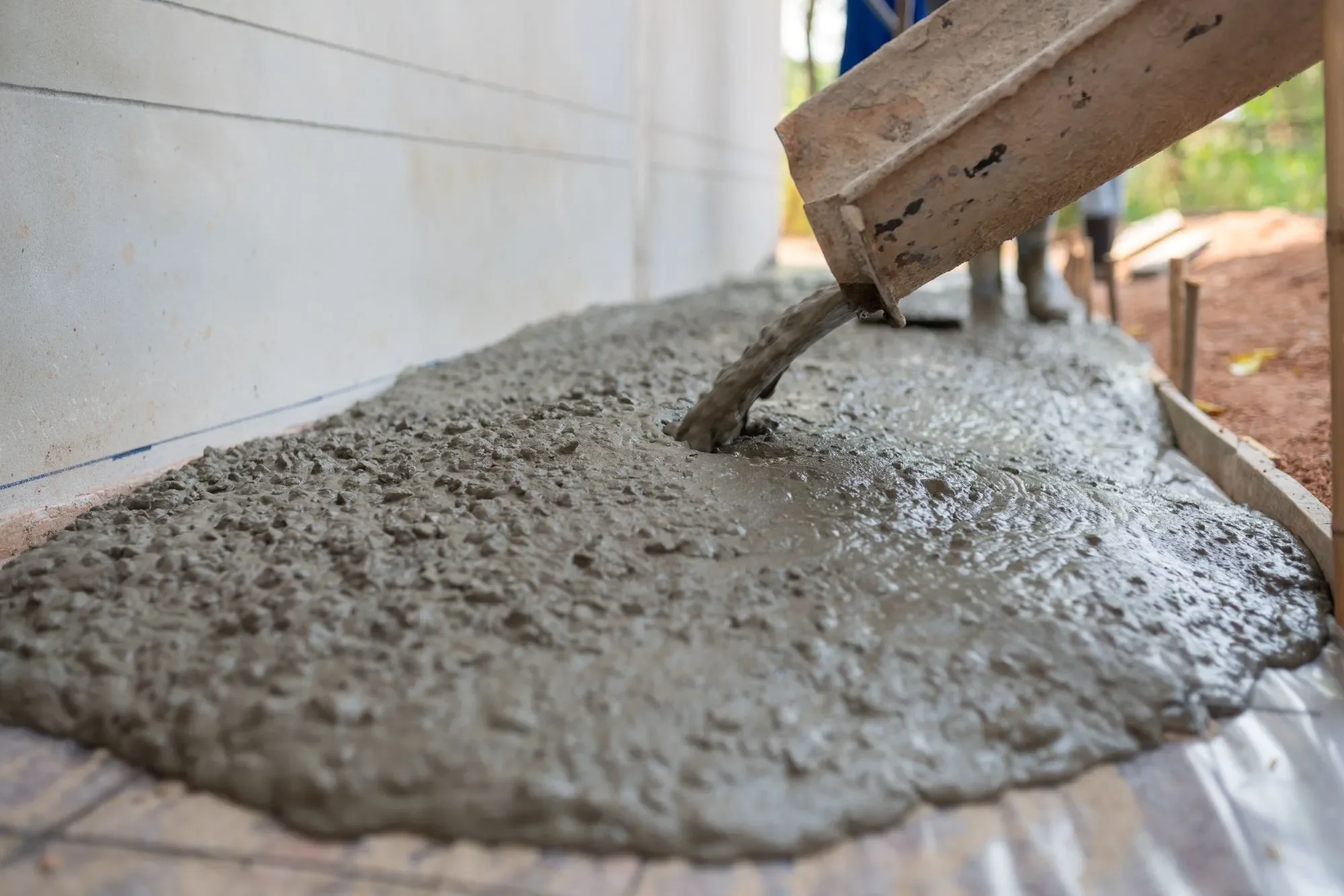
Concrete repair needs formwork when damage has removed enough material that the original edge, corner, elevation, or profile must be rebuilt rather than simply filled or covered. This commonly applies to broken slab edges, missing corners, damaged steps, driveway aprons, and deeper section loss. In these situations, forms create a temporary boundary that holds repair material in the required shape while it sets, making formed repair relevant when the remaining concrete no longer provides that boundary on its own. Aurum Concrete provides both concrete repair and formwork services in Edmonton, so the distinction between a surface repair and a formed repair directly affects the repair method selected for damaged concrete.
Why Some Concrete Repairs Need More Than Patching
Patching is generally suitable when damaged concrete can be removed back to sound material and the surrounding concrete still provides enough support and shape for the repair. It becomes less suitable when deterioration extends through an edge, corner, vertical face, or other area where part of the original boundary is missing.
The practical distinction is whether sound concrete still surrounds the damaged area well enough to contain and support the repair. When that boundary has been lost, formwork recreates it so repair material can be placed at the required thickness and held in the intended profile while it sets.
Damage Types That Usually Need Formwork
Formwork is most relevant where concrete has lost part of its physical shape rather than only developing surface wear, scaling, or a narrow crack. The location of the damage, how much of the original profile remains, and the condition of the surrounding concrete determine whether a formed repair is appropriate.
Broken Edges and Missing Corners
Broken slab edges and missing corners often need formwork because part of the original boundary is gone. A form recreates that boundary so the repair material can be placed to the intended depth and profile instead of being feathered into a thin, unsupported edge.
Loose or deteriorated concrete also has to be removed back to stable material before the missing section is rebuilt. Forming against unsound concrete can leave the new edge dependent on material that is already failing.
Damaged Steps, Risers, and Landings
Concrete steps depend on consistent tread, riser, edge, and landing geometry. Damage to these areas can leave an irregular walking surface or change the intended dimensions enough that a shallow patch does not fully restore the section.
Formwork allows the missing portion to be rebuilt to a controlled line, height, and profile. Restoring consistent geometry also matters for safe footing because damage to a tread edge, riser, or landing can create abrupt height changes or uneven transitions.
Driveway Aprons and Slab Edges
Driveway aprons and exposed slab edges can need formwork when concrete has broken away far enough that the original edge or transition is no longer intact. In these cases, the repair must recreate the missing section rather than only cover surface deterioration.
A formed repair can rebuild the edge while matching the surrounding elevation and profile where the remaining concrete provides a reliable reference. If settlement, frost movement, erosion, or base instability is still changing the slab position, rebuilding the damaged edge alone does not correct the condition causing the failure. Aurum Concrete applies the same distinction when evaluating garage aprons, where the appropriate repair depends on the condition of the concrete, the stability of its support, and whether the elevation can be corrected without removal.
Deep Spalling or Section Loss
Shallow spalling affects the surface and does not necessarily require forming. Formwork becomes more relevant when deterioration removes an edge or vertical face, creates substantial section loss, or leaves a cavity that cannot be restored to the intended profile using the remaining concrete as the repair boundary.
The damaged area still needs to be taken back to sound material before repair material is placed. If deterioration extends farther than the visibly broken area, the repair may need to include additional unsound concrete rather than following only the apparent surface damage.
Formwork vs Patching vs Resurfacing
Formwork, patching, and resurfacing solve different repair problems. The main distinction is whether the concrete has lost its original shape or whether deterioration remains within an otherwise intact section.
Formed repair is most appropriate when an edge, corner, riser, vertical face, or deeper section needs to be physically rebuilt. Its main limitation is that it does not correct underlying settlement, movement, or widespread deterioration by itself.
Patching is generally suitable when damage is localized and the surrounding concrete still provides enough support and shape for the repair. It becomes less suitable when part of the original boundary is missing and the repair material cannot be properly contained without forming.
Resurfacing is better suited to concrete that remains generally intact but has broader surface deterioration. It can improve the surface condition, but it does not rebuild missing edges, corners, or deeper section loss.
A large worn surface does not automatically require formwork if the concrete still retains its geometry. A smaller damaged area can
Formed repair is generally more suitable than replacement when damage is localized, the surrounding concrete remains serviceable, and the missing section can be rebuilt without leaving a larger instability unresolved. Replacement becomes more appropriate when deterioration affects several connected areas, the remaining concrete cannot provide a reliable repair base, or support and elevation problems require access beneath the slab. Aurum Concrete makes the same repair-versus-replacement distinction in its published garage apron guidance.
How Formwork Helps Restore Shape and Drainage
Formwork establishes a controlled boundary so the repaired section can be rebuilt to the required dimensions. On steps, aprons, and slab edges, this makes it possible to restore lines, elevations, and transitions that have been lost through deterioration or impact.
This control also matters where the concrete surface contributes to directing water. If damage has changed an edge, transition, or local slope, a formed repair can restore the intended local profile where that profile remains appropriate relative to the surrounding concrete.
Formwork does not independently correct drainage problems caused by broader settlement, site grading, erosion, or movement beneath the slab. Aurum Concrete’s garage apron guidance similarly treats drainage, concrete elevation, and base stability as related factors that must be considered together rather than assuming a surface repair alone will correct water movement.
When Formwork Prevents Repeat Failure
Formwork can reduce the risk of repeat failure when the original problem involved missing geometry and the repair needs adequate thickness, defined edges, or a controlled profile. Rebuilding the complete damaged section avoids relying on a thin repair at an unsupported edge.
A formed repair is most useful when the surrounding concrete is stable and the condition responsible for the damage is no longer actively undermining the repaired area. If movement, loss of support, drainage problems, or another continuing condition remains unresolved, rebuilding the missing section does not prevent the same problem from affecting the repair again