

Garage Apron Repair or Replacement
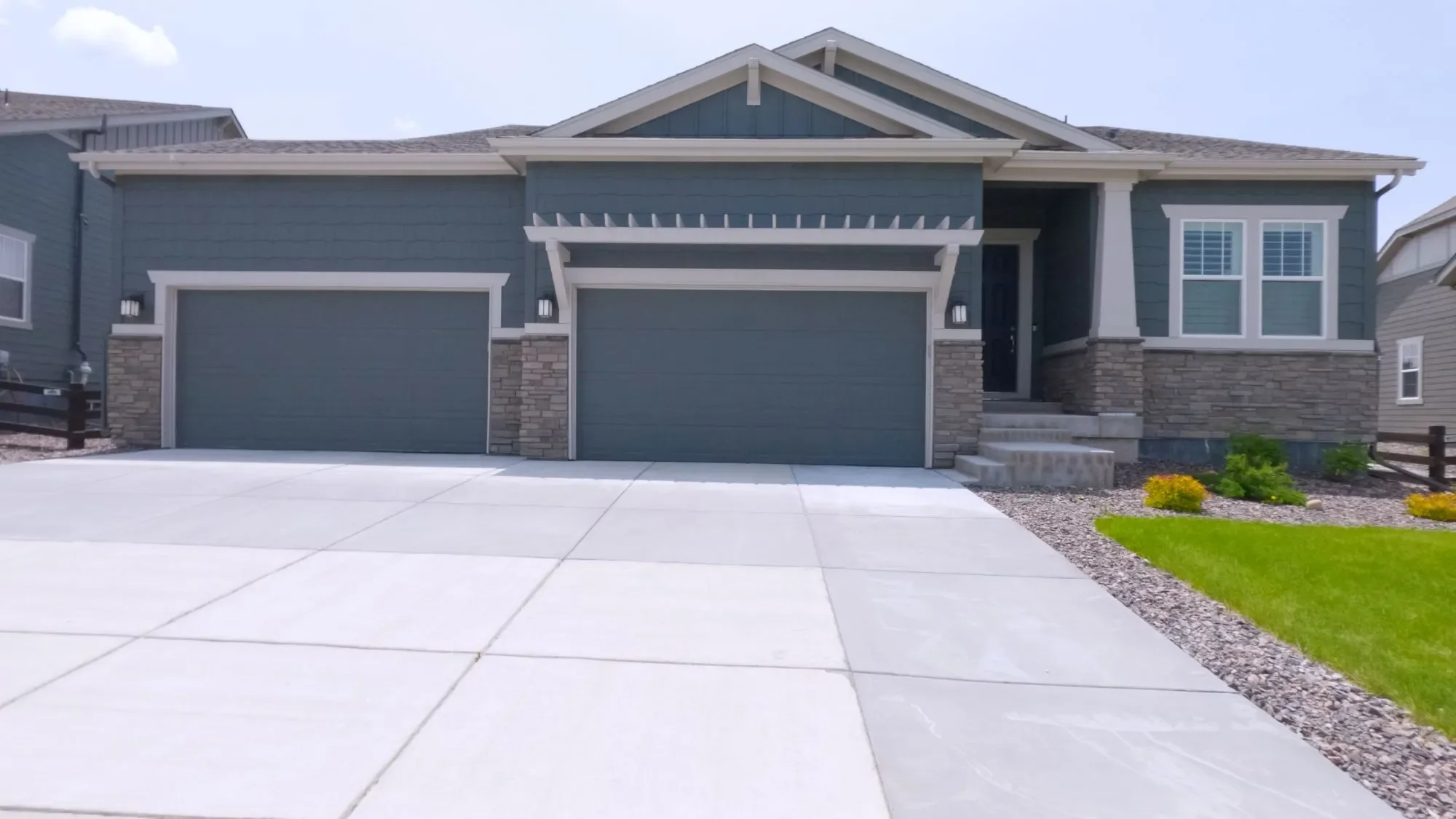
Garage apron repair or replacement becomes necessary when the concrete immediately outside a garage develops settlement, frost movement, cracking, surface deterioration or an incorrect drainage slope. This transition area is still considered the garage apron when it was poured continuously with the driveway and has no visible separating joint. The right solution depends on the condition of the concrete, the stability of its support and whether its elevation can be corrected without removal. Aurum Concrete assesses apron damage in relation to the driveway, garage threshold and surrounding drainage before recommending a repair method.
Why Garage Aprons Fail in Edmonton
A garage apron forms the transition between the exterior driveway and the garage floor. It carries vehicle loads while remaining exposed to snow, road salt, runoff and repeated freezing and thawing.
Frost heave develops when frost-susceptible soil, freezing temperatures and available moisture occur beneath the concrete. Water can migrate toward the freezing zone and form ice lenses that raise the soil and slab above it. When the ground thaws, displaced or weakened base material may allow the apron to settle unevenly instead of returning to its original position.
Minor seasonal movement does not automatically mean the apron has failed. Movement becomes a repair concern when it creates a recurring elevation difference, changes crack width, interferes with the garage door, causes water to drain toward the garage or leaves part of the slab unsupported.
Failure can also result from inadequate base preparation, inconsistent compaction or erosion beneath the concrete. Water may enter along open joints, unsealed slab edges, driveway cracks or areas affected by downspout discharge. Runoff flowing toward the garage can carry fine material out from beneath the apron and gradually create voids.
The joints around the apron also affect how movement appears. A contraction joint is a planned groove intended to control where shrinkage cracking occurs. A construction or isolation joint creates a more complete separation between independently placed or moving concrete sections. A visible line does not always mean the apron is fully separated from the driveway.
Apron damage is more likely to be isolated when movement stops at a defined joint, the driveway remains level and the garage floor shows no related displacement. Corresponding settlement or cracking in neighbouring concrete may indicate a broader support or drainage issue.
Signs a Garage Apron Can Be Repaired
Repair may be appropriate when the damage is limited, the apron remains stable and enough sound concrete remains to accept the selected treatment. Sound concrete should not contain widespread loose material, independently moving pieces or deterioration that continues beneath the visible surface.
The appropriate repair depends on the defect. Crack treatment may limit water entry through a stable crack. Grinding may reduce a minor raised edge. Slab lifting may restore an otherwise intact apron that has settled. Localized patching or resurfacing may address surface deterioration when the underlying slab remains stable. Aurum Concrete currently lists crack repair, slab lifting, grinding and protective surface treatments within its Edmonton concrete repair services.
Repair is less appropriate when crack widths change, elevation differences return after seasonal temperature changes, water continues to pool or garage door clearance changes over time. These conditions suggest that the apron may still be moving.
Minor Cracking Near the Garage Door
A narrow crack near the garage entrance may be repairable when both sides remain level and the crack does not noticeably widen, close or develop vertical displacement.
Stable cracks with no elevation difference may result from drying shrinkage or restrained movement during the original curing process. Cracks associated with settlement or frost heave are more likely to show vertical offset, changing width, branching patterns or movement that becomes more noticeable during winter.
A dormant crack may be sealed to reduce water entry when the concrete around it remains stable. Sealing an active crack without correcting the movement source usually provides only temporary protection because the repair material remains exposed to continuing displacement.
The crack’s relationship to the garage entrance must also be considered. Apron movement can interfere with the garage door’s bottom seal, reduce clearance during door travel or create an abrupt edge where vehicle tires cross the threshold. A crack may therefore require further assessment even when its visible width appears minor.
Surface Wear Without Major Settlement
Scaling, shallow pitting and localized surface loss may be repairable when the apron retains a suitable elevation, drainage slope and supporting base.
Localized repair removes and replaces concrete only within limited damaged areas. Resurfacing applies a bonded material across a broader portion of the existing apron. Both options require sound concrete beneath the damaged surface and will not stabilize a slab that continues to move.
The cause of the wear should be identified before treatment. De-icing chemicals, freeze-thaw exposure, vehicle abrasion, inadequate curing and weak finishing can produce similar surface symptoms. Continued moisture or salt exposure may cause deterioration to reappear through or beside a new surface treatment.
Loose concrete must be removed until a stable substrate is reached. Surface repair is unlikely to perform properly when deterioration extends deeply through the apron or when water repeatedly collects in the repaired area.
Signs a Garage Apron May Need Replacement
Replacement becomes more practical when the apron has broken into several displaced pieces, remains unstable or cannot be returned to an elevation that drains away from the garage.
Only the apron may need to be removed when the driveway and garage slab remain sound. Independent replacement is more feasible when the damaged area can be separated without undermining neighbouring concrete and the new apron can connect to the existing elevations through appropriate joints.
Replacement also permits access to the material beneath the slab. This may be necessary when the existing base is frost-susceptible, poorly compacted, washed out or unable to provide uniform support.
Sinking Toward the Garage
An apron that sinks toward the garage can direct rain, snowmelt and vehicle runoff beneath the garage door. Water may collect on the garage floor, enter open joints or refreeze at the entrance.
A sunken apron does not automatically require replacement. Slab lifting may be appropriate when the concrete remains in one or a few stable sections and can be raised without forcing against the garage slab, threshold or driveway. Aurum Concrete identifies foam jacking and mudjacking as available options for sunken driveways, garage pads and sidewalk sections.
Lifting has practical limits. It cannot restore concrete that has broken into many independently moving pieces or reliably reshape an apron that was originally poured with the wrong profile. It may also be unsuitable when the required lift would close a joint, place pressure against adjoining concrete, create a new high point or interfere with garage door clearance.
Filling a void restores support beneath the slab but does not automatically correct the reason the void formed. Ongoing erosion, concentrated runoff or open joints must also be addressed to reduce the risk of renewed settlement.
Replacement is more likely when the apron requires substantial reshaping or when unsuitable material beneath it must be excavated rather than filled.
Severe Frost Heave or Separation
Frost heave may raise the apron above the driveway, the garage floor or both. The movement can create a trip edge, cause vehicle impact, interfere with the garage door or produce cracks in several directions.
An apron may rise during freezing weather and partially settle after the ground thaws. It may also remain permanently displaced when the base shifts, loses density or no longer supports the slab uniformly. Observing the apron in both winter and warmer conditions can help distinguish temporary heave from permanent settlement.
Replacement becomes more likely when movement causes recurring door interference, wide separation, permanent vertical displacement or multiple unstable sections. Removing the apron allows unsuitable material to be excavated and the supporting base to be rebuilt.
Improved drainage and a properly prepared granular base reduce the conditions that contribute to frost movement. They cannot guarantee that no movement will occur when frost-susceptible soil or changing moisture conditions remain beneath the reconstructed area.
Water Draining Into the Garage
Water entering beneath the garage door may result from an apron that slopes toward the building, but the source should be confirmed before the concrete is blamed.
Water may also enter through foundation cracks, wall-to-slab joints, side grading or defects around the garage opening. Moisture appearing inside the garage does not prove that apron replacement is required.
When the apron is responsible, its elevation must provide outward drainage while remaining compatible with the garage threshold and driveway. The concrete generally needs to remain below the garage entrance without creating a low area where water can collect. Sloped surfaces are required to move water away from slab-on-grade buildings and foundation walls.
Lifting may correct the problem when an intact apron has settled and sufficient clearance exists to raise it. Replacement may be necessary when the original shape, threshold relationship or surrounding driveway elevations prevent the correct drainage path from being restored.
A channel drain may be appropriate when the surrounding grades cannot provide drainage through slope alone. It requires a reliable discharge route, adequate installation depth and access for cleaning. The drain must also remain functional under Edmonton winter conditions. Installing one without a suitable outlet may relocate the standing water rather than resolve it.
Repair vs Replacement Decision Guide
Repair usually involves less removal, less disruption and a lower initial cost than replacement. It makes the most sense when the existing apron remains stable and the selected method can correct the actual defect without concealing continuing movement.
Crack treatment is most appropriate for stable cracks without vertical displacement. Grinding may correct a minor raised edge when removing material will not weaken the slab or create an unsuitable slope. Resurfacing may restore a broadly worn surface when the substrate remains sound. Lifting may correct settlement when the concrete remains intact and enough clearance exists to restore its elevation.
The expected durability of a repair depends on whether the cause has stopped. A lifted apron may settle again if erosion continues. A resurfaced apron may crack when the underlying slab remains active. A sealed crack may reopen when seasonal movement has not been corrected.
Replacement creates greater cost and disruption because the existing concrete must be removed and a new apron placed. Its main advantage is access to the supporting material beneath the slab. Replacement allows unsuitable base, voids, drainage conditions and the apron profile to be corrected before new concrete is installed.
Replacement is generally the stronger decision when the apron contains multiple displaced sections, cannot support a bonded repair or cannot be lifted into a workable position. It may also be necessary when movement continues across several seasons or the slab cannot be given an outward drainage slope without changing its shape.
Nearby driveway cracks should generally be evaluated after the apron elevation and drainage are understood. Apron work should come first when its movement is stressing the driveway or directing water into the adjoining base. Independent driveway cracks may be repaired separately when they are not related to the apron’s movement.
How Apron Damage Affects the Driveway and Garage Slab
The apron, driveway and garage floor may have been placed separately, but movement in one section can still affect the support and drainage around the others.
When an apron settles, soil or granular material may be washed out near the adjoining driveway or garage slab. This loss of contact can leave slab edges with reduced support, increasing the likelihood of edge cracking or further settlement under vehicle loads.
The apron and garage slab commonly need to move independently rather than being rigidly bonded together. An appropriate isolation or construction joint allows movement between the exterior concrete and the garage structure. Filling that transition with a rigid material may transfer stress between the sections.
Apron damage is more likely to be isolated when displacement ends at the joint, the driveway panels remain stable and the garage floor has not changed elevation. Aligned cracks or settlement appearing on both sides of a joint may indicate that the neighbouring sections are responding to the same drainage or subgrade condition.
The garage slab should not be assumed to have moved simply because the apron sits at a different height. An assessment should compare the elevations of the garage floor, threshold, apron and driveway. It should also document vertical crack displacement, joint width, drainage direction and changes that occur between seasons.
Preventing Repeat Apron Failure
A durable repair must address the condition that caused the original failure. Replacing visible concrete without correcting weak support, water entry or improper elevation can allow the same problem to return.
The base should provide consistent support across the apron. Unsuitable material may need to be removed before granular material is installed and compacted in controlled lifts. Compaction near the garage foundation and slab edges may require smaller equipment or methods suited to confined areas.
The required base material and excavation depth depend on the existing soil, moisture conditions, vehicle loading and the condition of the excavated area. One fixed base specification is not appropriate for every property.
The finished apron must direct water away from the garage while maintaining a practical transition for vehicles. Downspouts, snow storage and driveway runoff should not concentrate moisture beside the apron or garage entrance.
Joint design should reflect how each concrete section is intended to move. Isolation joints separate the apron from fixed structures. Contraction joints control where shrinkage cracks form. Construction joints identify separate concrete placements and may require treatment to limit water entry.
Existing joints should be inspected as part of ongoing maintenance. Failed sealant, open gaps and deteriorated joint edges can allow water to enter the base and contribute to erosion or frost-related movement.
New exterior concrete also requires suitable placement, curing and freeze-thaw protection. Concrete Alberta recommends air entrainment, a controlled water-to-cementing-materials ratio and proper curing for residential driveways and garage slabs exposed to Alberta conditions.
Garage Apron Repair From Aurum Concrete
A garage apron review should identify the likely cause of the damage, which concrete sections are affected and whether the slab remains suitable for repair. The recommendation should also explain whether drainage correction, base stabilization or removal of unsound concrete is required.
Aurum Concrete provides Edmonton concrete services that include crack repair, slab lifting and levelling, grinding, surface restoration, protective coatings and concrete demolition. Its published repair scope includes cracked or sunken driveways, garage pads, walkways and other residential or commercial slabs.
A repair quote should identify the proposed method and its limitations. It should also clarify whether adjacent concrete, drainage work, demolition or new concrete placement falls within the quoted scope.
Aurum Concrete provides concrete repair in Edmonton for cracked, worn, sunken and uneven concrete. Property owners can request a quote to determine whether crack repair, lifting, grinding, surface restoration or removal is appropriate for the garage apron’s current condition.
