
How Concrete Resurfacing Improves Driveways, Garages, and Walkways
Concrete resurfacing restores worn slabs without removing and replacing the entire surface. In Alberta, freeze thaw cycles, de icing salts, and vehicle traffic gradually wear down driveways, garage floors, and walkways. When structural integrity remains intact, resurfacing improves appearance, increases traction, and extends usable lifespan while avoiding full demolition. Aurum Concrete works with residential and light commercial property owners across Alberta to upgrade aging concrete surfaces using bonded overlay systems designed for local climate conditions.
What Concrete Resurfacing Is and When It Makes Sense
Concrete resurfacing involves applying a specially formulated overlay to an existing slab after thorough surface preparation. The overlay bonds to the concrete and creates a new, uniform top layer that restores both performance and appearance.
Resurfacing makes sense when the base slab remains structurally sound but shows surface level wear. Minor scaling, cosmetic cracking, surface pitting, and discoloration are typical candidates. When deep structural cracking, settlement, or major slab movement is present, replacement may be necessary instead.
Why Resurfacing Instead of Replacing
Many slabs that appear heavily worn still retain structural stability. In those cases, resurfacing offers meaningful benefits without the cost and disruption of removal.
Restoring Appearance Without Full Removal
Resurfacing conceals minor imperfections and creates a consistent finish across the entire surface. Rather than breaking out and replacing concrete, the overlay refreshes the visible layer and restores visual continuity. This approach reduces demolition, disposal, and reconstruction work while delivering a renewed surface.
Extending the Lifespan of Existing Concrete
A bonded overlay protects the underlying slab from further surface deterioration. By sealing small cracks and reducing moisture penetration, resurfacing limits freeze thaw damage and surface scaling, which are common concerns in Alberta conditions. Protecting the existing slab slows long term degradation and delays the need for full replacement.
Reducing Disruption Compared to Replacement
Full concrete replacement involves demolition, forming, pouring, and extended curing. Resurfacing focuses on preparation and overlay application, which generally reduces project timelines and limits disruption to driveways, garages, and entryways. For many homeowners and light commercial properties, minimizing downtime is an important factor.
Common Surface Problems Resurfacing Can Fix
Resurfacing addresses surface deterioration rather than structural instability. When the slab remains intact, overlays can correct several visible issues.
Surface Scaling and Minor Spalling
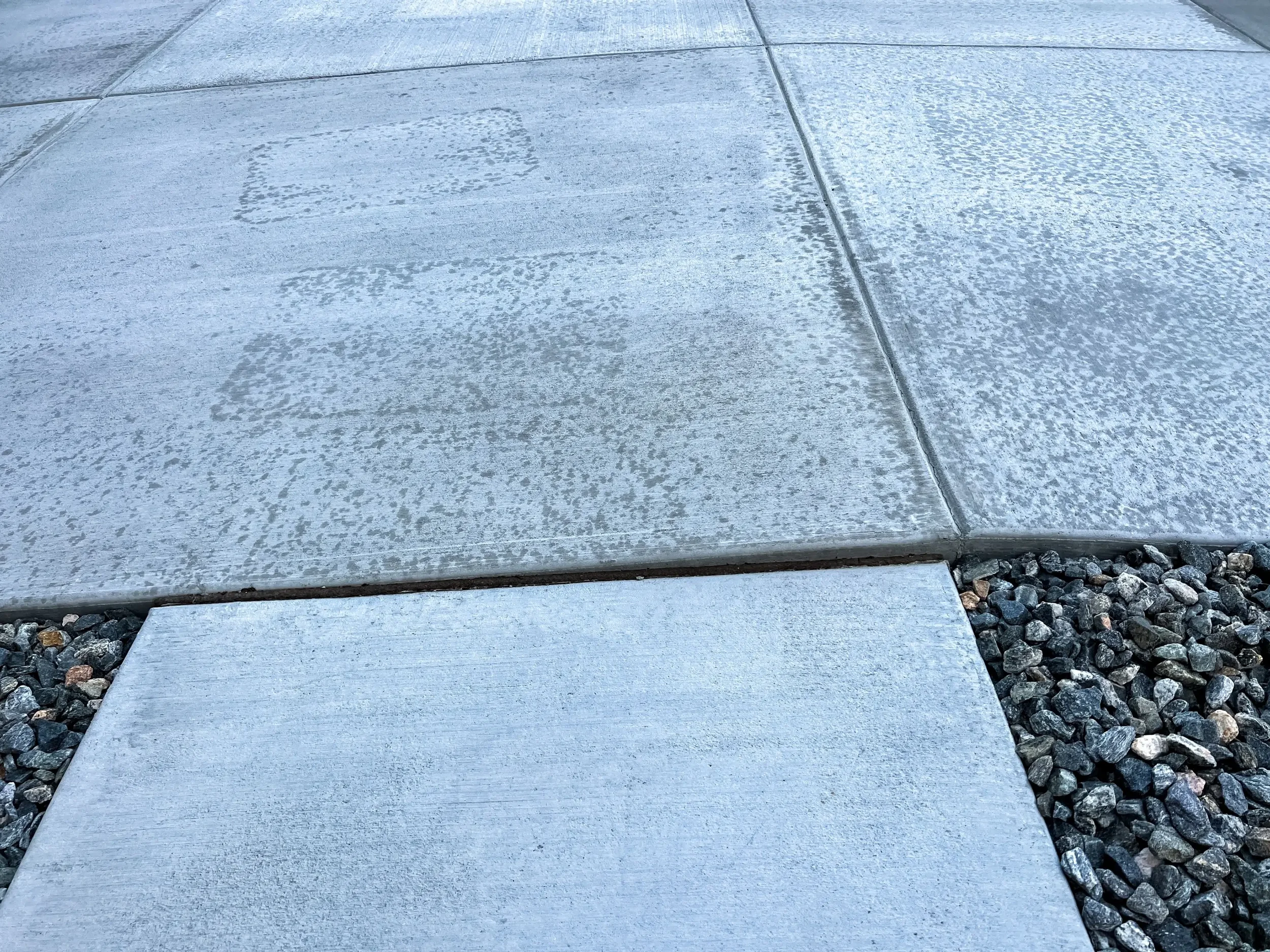
Surface scaling occurs when the top layer flakes due to freeze thaw exposure or de icing salts. Minor spalling produces small chips and pits across the slab. An overlay restores a smooth surface and adds renewed protection against further surface erosion.
Hairline Cracks and Cosmetic Imperfections
Fine cracks that do not indicate slab movement can be stabilized and concealed beneath a resurfacing layer. Surface irregularities and minor textural inconsistencies can also be corrected through proper preparation and overlay installation.
Discoloration and Staining
Oil stains, tire marks, and uneven weathering affect many driveways and garage floors. Resurfacing creates a uniform finish and allows decorative colour integration to improve overall consistency.
How Resurfacing Improves Traction and Safety
Resurfacing systems can incorporate textured finishes to improve grip. Broom finishes provide subtle traction for driveways, while textured overlays enhance safety on walkways and entry areas. Slip resistance additives can also be integrated into the surface layer, which improves performance in wet or icy Alberta conditions. Improved surface texture reduces the risk of slips while maintaining durability under vehicle and foot traffic.
Overlay Options for Different Areas
Different surfaces require tailored solutions based on use and exposure.
Driveway Resurfacing Solutions
Driveways require overlays capable of handling vehicle loads and temperature fluctuations. Proper slope and drainage planning ensure water moves away from the home rather than pooling near foundations.
Garage Floor Overlays
Garage resurfacing often includes smoother finishes combined with protective coatings that resist oil absorption and simplify cleaning. These systems must withstand repeated vehicle traffic and occasional impact from tools or equipment.
Walkway and Entryway Finishes
Walkways and entry areas benefit from decorative finishes that combine visual enhancement with improved traction. Colour integration can align the surface with surrounding architectural elements.
Light Commercial Applications
Resurfacing is suitable for light commercial spaces with moderate traffic loads such as small retail entrances or office walkways. Suitability depends on slab condition and anticipated load demands.
Curing and Installation Considerations
Successful resurfacing depends on proper surface preparation. The slab must be cleaned, mechanically profiled, and free of contaminants to ensure strong bonding. Bonding agents and overlay materials must be applied under appropriate environmental conditions.
Curing time varies depending on product type and temperature. Alberta’s climate requires careful scheduling to ensure adequate curing and long term adhesion.
How Resurfacing Enhances Curb Appeal
A resurfaced driveway or entryway improves the overall presentation of a property. Uniform texture, refreshed colour, and clean edges create a cohesive look that complements landscaping and exterior finishes.
Property owners looking to modernize aging concrete surfaces often explore design options through experienced contractors such as Aurum Concrete to align function with aesthetics.
Residential and Light Commercial Suitability
Resurfacing is appropriate for residential driveways, garages, patios, and walkways where the underlying slab remains stable. Light commercial applications with controlled vehicle and foot traffic can also benefit.
However, slabs with deep structural cracking, severe settlement, or compromised base layers typically require replacement instead of resurfacing.
When to Contact Aurum Concrete
Determining whether resurfacing is appropriate requires evaluating slab integrity, surface wear, and drainage conditions. An on site assessment confirms compatibility and identifies any structural concerns.
Property owners across Alberta can schedule resurfacing consultations and evaluations through the Aurum Concrete contact page to determine whether an overlay system is the right solution for their driveway, garage, or walkway.
