

Can Any Concrete Be Resurfaced? Understanding Substrate Requirements
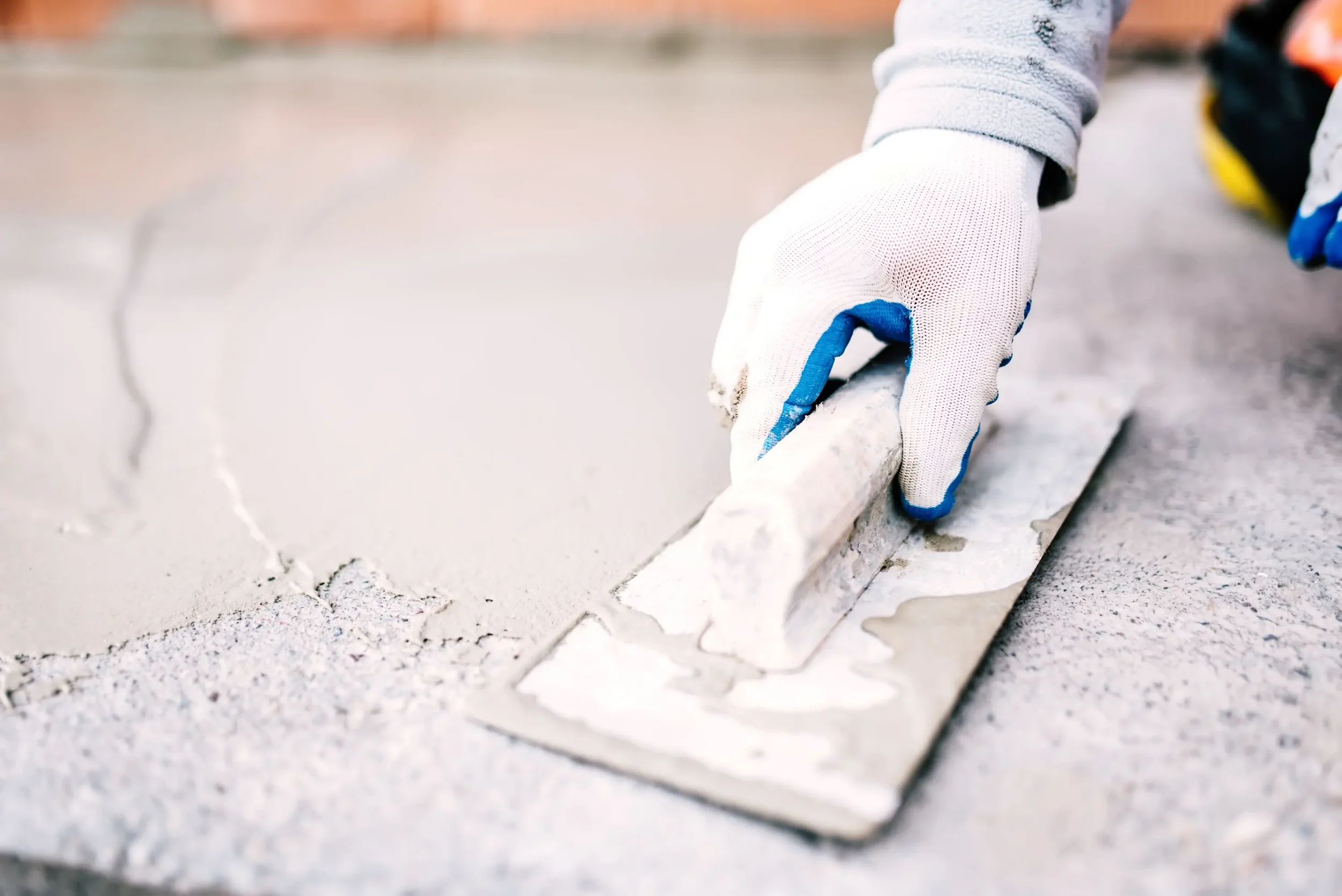
Concrete resurfacing is only successful when the existing slab is structurally stable, dimensionally sound, and dry enough to maintain bond strength under Alberta’s freeze thaw stress. Resurfacing does not correct structural instability, subgrade failure, or ongoing moisture intrusion, which means substrate evaluation determines whether resurfacing will perform long term or fail prematurely. Aurum Concrete evaluates resurfacing eligibility by verifying structural integrity, moisture stability, and bond readiness before recommending overlay installation.
Structural Soundness Is Required Before Resurfacing
Resurfacing depends entirely on adhesion between the overlay and the existing slab, so the underlying concrete must retain structural continuity. If the slab exhibits active heaving, differential settlement, progressive crack widening, or widespread delamination, resurfacing will mirror those failures through reflective cracking or bond separation.
Concrete is generally suitable for resurfacing when it meets the following structural thresholds:
• No major frost heave or settlement movement
• No active structural cracks increasing in width
• No widespread hollow sounding or delaminated zones
• No severe reinforcement corrosion expanding beneath the surface
• No evidence of subgrade erosion affecting load bearing capacity
Hairline shrinkage cracks may remain stable and acceptable, but structural cracks tied to movement disqualify the slab unless corrected. Driveways, garages, and walkways must be evaluated differently because vehicle loading, enclosed humidity, and exterior exposure create different stress environments.
Moisture Stability and Vapor Pressure Risk
Moisture within the slab is one of the most common causes of resurfacing failure in Alberta’s climate because freeze thaw expansion weakens bond lines and creates internal pressure beneath low permeability overlays. Surface dryness does not confirm internal dryness, which is why moisture testing must precede resurfacing decisions.
Evaluation methods commonly include plastic sheet testing for surface condensation, calcium chloride tests to measure vapor emission rates, relative humidity probes to assess internal moisture levels, and infrared scanning to identify saturation patterns. If vapor emission exceeds acceptable thresholds, resurfacing should be delayed until drying or drainage corrections occur because applying an overlay over trapped moisture often results in bubbling, blistering, or delamination within seasonal temperature cycles.
Bond Strength and Surface Preparation Requirements
Bond strength must exceed the tensile strength of the existing concrete surface layer, which means weak surface paste or laitance must be removed before overlay placement. Mechanical preparation such as grinding or shot blasting creates surface profile that allows bonding agents and polymer modified overlays to mechanically interlock with the slab.
Effective preparation includes:
• Removing sealers, oils, grease, and contaminants
• Mechanically profiling the surface to expose sound aggregate
• Cleaning thoroughly to eliminate dust and debris
• Repairing spalls and localized defects before overlay placement
• Applying bonding agents where manufacturer specifications require
Bonding agents improve adhesion but cannot compensate for unstable substrate or moisture imbalance. Professional assessment through Aurum Concrete’s concrete resurfacing services in Edmonton includes evaluating whether the slab can sustain proper bond strength under environmental stress.
When Patching Is Sufficient Instead of Resurfacing
Localized defects do not automatically require full resurfacing if the surrounding slab remains structurally intact and moisture stable. Minor spalling, small surface scaling areas, or isolated non structural cracks can often be corrected through targeted patch repair when there is no evidence of progressive movement.
Patching is generally viable when damage remains confined to limited areas, reinforcement corrosion is not widespread, subgrade support remains stable, and surface deterioration has not expanded beyond localized zones. However, repeated patching across multiple regions suggests systemic deterioration, at which point resurfacing may be considered if structural integrity remains sufficient to support a bonded overlay.
When Replacement Is Structurally Necessary
Resurfacing becomes impractical when structural instability originates beneath the bonding plane because overlays cannot restore subgrade support or reverse reinforcement expansion. Slab replacement is typically required when frost heaving continues seasonally, subgrade voids compromise load bearing capacity, reinforcement corrosion has expanded across large areas, or delamination affects significant portions of the slab.
Applying resurfacing over these conditions often results in reflective cracking, edge separation, and bond failure within a few winters because underlying forces continue acting on the overlay. Structural correction through removal and reconstruction becomes the only reliable long term solution once failure mechanisms extend beyond the surface layer.
Substrate Evaluation by Application Area
Driveways require assessment for flexural stress from vehicle loading, salt exposure, and subgrade compaction integrity because traffic load significantly influences overlay durability. Garage floors demand vapor emission testing due to enclosed humidity and limited evaporation, which increases the risk of trapped moisture beneath low permeability coatings. Walkways require evaluation of slope, edge integrity, and drainage performance to prevent pooling that accelerates freeze thaw damage.
Each surface type imposes different stress patterns on the slab, which means resurfacing eligibility must be determined by environment specific structural and moisture conditions rather than uniform assumptions.
Concrete resurfacing is viable only when structural stability, moisture balance, bond readiness, and environmental exposure align. Aurum Concrete evaluates slab condition comprehensively before recommending resurfacing or replacement, ensuring that overlay installation is structurally justified rather than cosmetically driven. For project specific assessment in Alberta, visit Aurum Concrete’s primary service page to determine whether your slab meets resurfacing requirements.
