

How Concrete Grinding Fixes Uneven Surfaces and Reduces Trip Hazards
Uneven concrete surfaces are a common safety issue across residential and commercial properties in Edmonton. Raised panels, lifted joints, and surface irregularities can develop over time due to freeze thaw cycles, soil movement, and long term wear. These conditions create trip hazards, drainage problems, and accessibility concerns that affect both safety and liability. Aurum Concrete applies professional grinding techniques to correct surface height differences and restore safer, more functional concrete without the need for full slab replacement.
Concrete grinding focuses on precision surface correction. By removing high spots and smoothing transitions, grinding helps property owners address hazards efficiently while preserving structurally sound concrete.
Why Concrete Surfaces Become Uneven
Concrete slabs rarely fail at once. Instead, unevenness develops gradually as environmental and structural factors take effect. In Edmonton, temperature fluctuations allow moisture to penetrate joints and cracks. As water freezes and expands, sections of concrete can lift or shift slightly. Over time, these small movements create noticeable height differences between panels.
Settlement also contributes to uneven surfaces. Changes in soil moisture, compaction issues, or nearby excavation can cause parts of a slab to sink while adjacent sections remain stable. When slabs move independently, edges and joints become raised, increasing the risk of trips and falls.
What Concrete Grinding Is and How It Works
Concrete grinding is a mechanical process used to remove raised areas and smooth uneven surfaces. Instead of lifting or replacing the slab, grinding selectively removes material from high points to restore a more uniform surface elevation.
Diamond Grinding Explained
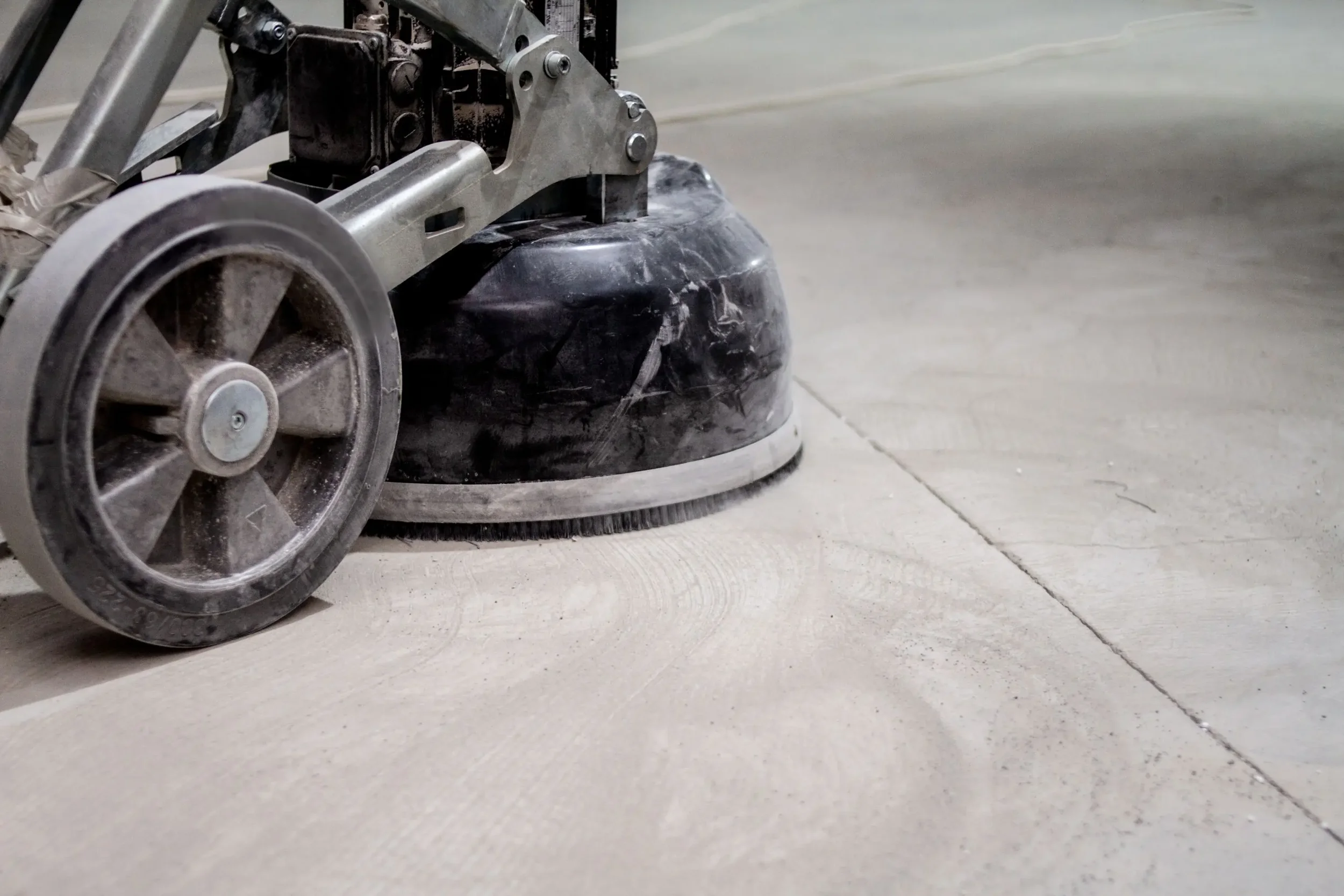
Diamond grinding uses rotating discs embedded with industrial grade diamond segments. These diamonds abrade the concrete surface in controlled passes, allowing technicians to gradually reduce high spots without damaging surrounding areas. The process is precise and adjustable, making it well suited for correcting trip hazards and surface irregularities.
Equipment Used for Grinding
Professional grinding equipment is selected based on slab hardness, surface condition, and access requirements. Walk behind grinders are commonly used for sidewalks, driveways, and interior slabs, while handheld tools address edges and tight transitions. Vacuum assisted systems capture dust during operation, supporting cleaner job sites and improved visibility.
Eliminating Trip Hazards and Improving Safety
Uneven concrete poses a significant safety concern, particularly in walkways, entrances, and high traffic areas. Grinding helps reduce these hazards by creating smoother transitions between slab sections.
Residential Surface Safety
On residential properties, grinding is often used to correct raised driveway panels, uneven sidewalks, and patio surfaces. Smoother transitions improve footing, reduce fall risk, and support safer access for residents and visitors.
Commercial and Accessibility Considerations
Commercial properties face additional safety expectations. Uneven surfaces near entrances, parking areas, and pedestrian routes increase liability exposure. While formal accessibility standards vary by application, surface grinding supports safer movement by reducing abrupt elevation changes and improving consistency across walking paths.
Grinding Compared With Other Surface Correction Methods
Concrete grinding is one of several options for correcting uneven surfaces. Choosing the right method depends on slab condition and the cause of movement.
Grinding vs Mudjacking
Mudjacking lifts sunken slabs by injecting material beneath the concrete. This approach is effective when settlement is the primary issue and the slab remains intact. Grinding is preferred when slabs have lifted rather than sunk, or when only minor height differences need correction.
Grinding vs Slab Replacement
Full slab replacement involves demolition, removal, and reinstallation. While sometimes necessary, replacement is typically reserved for severely damaged or structurally compromised concrete. Grinding offers a faster, more cost effective solution when the slab is otherwise sound and only surface correction is required.
For surface leveling and hazard reduction, concrete grinding in Edmonton is often the most efficient option when structural integrity is not in question.
Ideal Conditions and Limits of Concrete Grinding
Grinding performs best when the slab is stable and free of major structural cracks. It is well suited for correcting raised joints, curled edges, and surface irregularities caused by minor movement or wear.
However, grinding has limits. It cannot correct severe settlement, deep structural failure, or underlying base issues. In these cases, alternative repair methods or replacement may be required. A professional assessment determines whether grinding is appropriate for each surface.
Dust Control and Jobsite Safety During Grinding
Concrete grinding generates fine dust that must be managed carefully, especially indoors or in occupied areas. Professional equipment uses integrated dust extraction systems that capture debris at the source. Additional containment or ventilation may be used depending on site conditions.
Dust control supports worker safety, protects nearby surfaces, and ensures compliance with workplace safety expectations during the grinding process.
Expected Results After Grinding
After grinding, surfaces become smoother, safer, and more uniform. Trip hazards are reduced, transitions are improved, and walkable or vehicle rated areas function more effectively. Grinding also prepares surfaces for coatings or sealers when additional protection or finishing is planned.
With proper application, grinding delivers long lasting results that support safety and surface performance across residential and commercial environments.
For property owners seeking a practical solution without full replacement, Aurum Concrete offers experience and services focused on long term concrete performance. When surface hazards need correction, grinding provides a reliable and efficient approach.
Next Steps
If you are dealing with uneven concrete surfaces or trip hazards, professional assessment helps determine the most effective solution. Contact us for a free consultation to discuss your project, review surface conditions, and plan the appropriate repair approach.
