

Driveway Edge Cracking: Cosmetic or Structural Problem?
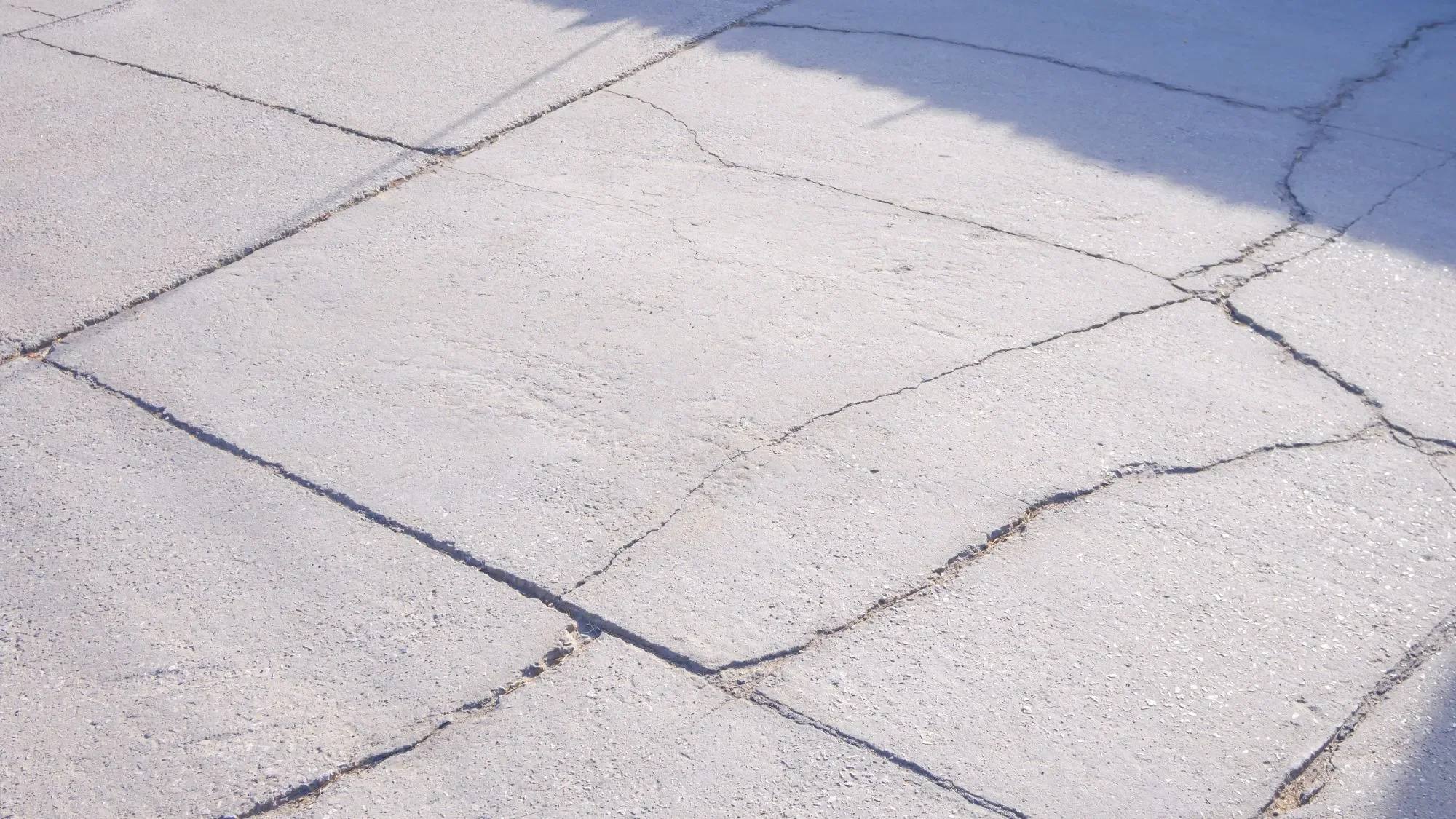
Driveway edge cracking can result from normal surface deterioration, but in Edmonton conditions it can also indicate problems with soil support, drainage, or structural movement beneath the concrete. The location of the damage, the presence of movement, and whether the crack changes over time are usually more important than the size of the crack itself. Aurum Concrete evaluates driveway edge damage based on how the concrete is performing, not simply how the crack appears.
Why Driveway Edges Fail First in Edmonton Conditions
Driveway edges experience different loading and environmental conditions than the center of the slab. They have less surrounding support, receive more direct water exposure, and are often affected first when underlying soil conditions change.
Soil Movement and Lack of Lateral Support
The edges of a driveway typically have less lateral support than interior sections of the slab. Surrounding soil helps resist outward movement and distribute loading along the edge of the concrete. When this support changes, the edge becomes more vulnerable to stress and movement.
In Edmonton, freeze-thaw cycles and seasonal moisture changes can cause repeated movement in the supporting soils. Soil beside the driveway can settle, erode, freeze, or shift independently, leaving the concrete edge unsupported. Unlike the center of the driveway, which is supported on all sides, edge sections carry loads with support from only one side. Once support is reduced, the edge of the slab becomes more vulnerable to cracking, settling, and breaking under normal vehicle loads. Areas near landscaping beds, retaining walls, and sloped grades often experience these problems more frequently.
Water Exposure and Edge Erosion Patterns
Moisture intrusion and resulting soil movement are among the most common contributors to driveway edge failure in freeze-thaw climates. Rain, snowmelt, irrigation runoff, and poor drainage can saturate the soil beside the driveway, gradually removing support beneath the concrete edge.
Water can wash out fine particles, soften supporting soils, and create voids beneath the slab edge. This erosion often develops slowly and may not be visible until cracking, settlement, or edge collapse begins to occur. Repeated freeze-thaw cycles can accelerate the process by expanding moisture within both the concrete and the supporting soil.
Signs Your Edge Cracks Are Only Surface-Level
Not all driveway edge cracks indicate structural failure. Some cracks remain cosmetic and stable for many years without affecting the performance of the driveway.
Hairline Separation Without Vertical Displacement
Hairline cracks that remain narrow, uniform, and level are often associated with normal concrete shrinkage, minor thermal movement, or surface aging rather than structural instability.
When both sides of the crack remain at the same elevation and there is no crumbling, separation, or visible movement, the damage is more likely to remain a maintenance issue rather than an immediate structural concern. However, changes in drainage conditions, support, or movement patterns can cause previously stable cracks to become active over time.
Stable Base With No Widening Over Time
A stable crack typically shows little or no change over multiple seasons. If the surrounding concrete remains level, drainage conditions remain consistent, and the crack does not widen, branch, or spread into adjacent areas, the supporting base may still be performing adequately.
Monitoring changes through photographs or periodic measurements over at least one seasonal cycle can help determine whether a crack is remaining stable or becoming active.
When Edge Cracking Signals Structural Instability
Structural edge damage usually involves movement, loss of support, or progressive deterioration rather than a single isolated surface defect.
Sinking, Tilting, or Crumbling Edges
Driveway edges that sink, tilt, break apart, or develop missing sections often indicate that support beneath the slab has been compromised. Settlement, erosion, frost movement, or insufficient base preparation can all contribute to this type of damage.
This type of failure differs from normal surface weathering or aging because the underlying support conditions have changed. Once vertical movement occurs, simply sealing the crack rarely addresses the underlying problem because the forces causing the movement remain active. However, not all vertical displacement requires complete reconstruction, as repair options depend on the amount of movement, the remaining support, and the condition of the surrounding slab.
Cracks That Continue Into the Driveway Slab
Cracks that begin at the driveway edge and continue through the slab may indicate that the stresses affecting the edge have extended into the structural portion of the driveway.
This does not always mean complete driveway failure, but it can suggest that soil movement, settlement, drainage problems, or loading conditions are affecting a larger area than initially visible. Isolated cracks may remain localized, while branching patterns, repeated cracking, or expanding crack networks can indicate more widespread support problems. Continued crack growth, repeated repairs in the same location, or multiple areas of deterioration often warrant further investigation.
How to Assess Severity Before Choosing a Repair Approach
Before selecting a driveway repair method, several factors help determine whether the damage is cosmetic or structural:
Whether the crack width has changed over time
Whether one side of the crack sits higher than the other
Whether the edge is crumbling, breaking away, or sinking
Whether water collects near the damaged area
Whether nearby landscaping or grading may be contributing to erosion
Whether cracks continue into the main driveway slab
Whether repairs have previously been attempted in the same location
Whether the damaged area is exposed to regular vehicle traffic
No single factor determines severity on its own. Vertical movement, active widening, and evidence of lost support are generally stronger indicators of structural problems than crack width alone. Property owners can often monitor visible changes, but active movement, settlement, repeated cracking, or widespread deterioration typically require professional assessment.
Repair Options Based on Edge Damage Severity
The appropriate repair approach depends on whether the concrete itself remains structurally sound and whether the underlying support conditions remain stable.
Minor Edge Repairs and Sealing
Minor repairs may be appropriate when the damage is limited to narrow cracks, small chips, or localized surface deterioration without evidence of settlement or ongoing movement.
These repairs are intended to reduce moisture intrusion, slow further deterioration, and restore the appearance of the driveway edge. If movement, settlement, or water infiltration remain active, sealing alone may provide only temporary improvement.
Grinding and Resurfacing for Worn Edges
Grinding and resurfacing may be suitable when edge deterioration affects the surface condition of the concrete but the underlying slab remains stable and properly supported.
These approaches can address surface wear, scaling, and minor irregularities. However, resurfacing restores surface condition only and does not rebuild lost support beneath the slab or correct active structural movement.
Partial Rebuild or Formwork for Structural Failure
Partial reconstruction may become necessary when sections of the driveway edge have lost structural support, experienced significant settlement, or deteriorated beyond repair.
This approach generally involves removing damaged concrete, restoring base conditions, and rebuilding the affected section to restore both support and durability. Localized reconstruction can often address structural edge failure without requiring replacement of the entire driveway. However, widespread settlement, repeated failures, or extensive deterioration may require more substantial reconstruction.
What Happens If Structural Edge Damage Is Ignored
Structural edge damage rarely remains isolated. Continued water infiltration, freeze-thaw cycling, and vehicle loading can gradually increase the amount of unsupported concrete and accelerate deterioration.
As support continues to deteriorate, stresses can transfer into adjacent sections of the driveway, causing larger cracks, additional settlement, and broader areas of failure. Over time, ignored edge damage can lead to slab cracking, drainage problems, trip hazards, spalling, and increased reconstruction requirements.
What begins as localized edge failure may eventually affect the performance and stability of larger sections of the driveway.
Choosing the Right Concrete Repair Approach for Driveway Edges in Edmonton
The appropriate repair approach depends on the extent of deterioration, movement, and the condition of the supporting base. Surface treatments may be appropriate for stable cracks and minor deterioration, while settlement, movement, and loss of support typically require more extensive corrective work.
Stable cracks may sometimes be monitored through seasonal cycles before repair decisions are made, while active movement generally warrants earlier intervention. For Edmonton driveways, evaluating moisture exposure, soil stability, crack movement, and the condition of the surrounding concrete provides the clearest indication of whether repair, reconstruction, or continued monitoring is the most appropriate course of action. Aurum Concrete assesses driveway edge deterioration based on both the visible damage and the conditions causing it.
