

How Fast Do Concrete Cracks Spread in Edmonton’s Climate?
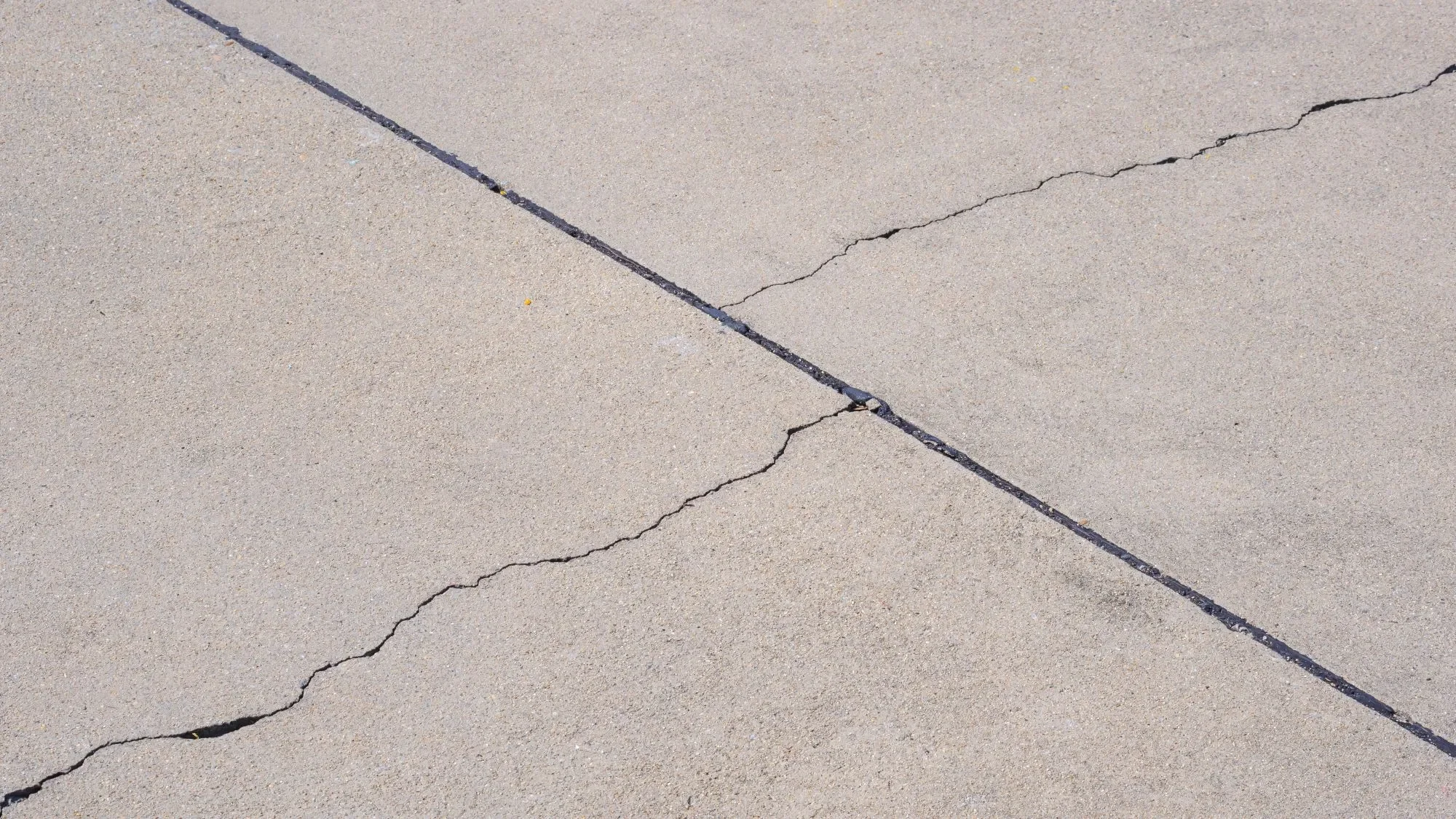
How fast concrete cracks spread in Edmonton depends on moisture exposure, freeze-thaw cycling, crack movement, drainage, and the condition of the surrounding slab or foundation. A small crack may stay mostly unchanged for months in a protected area, while an exposed crack that takes in water can widen, deepen, or shift after one winter. Aurum Concrete helps Edmonton property owners assess crack growth before minor damage becomes harder to control.
Why Cracks Accelerate Faster In Edmonton Than Other Regions
Concrete cracks can worsen faster in Edmonton because local conditions repeatedly expose concrete to freezing temperatures, thaw periods, snowmelt, rain, de-icing salts, and soil movement. The risk is not only that a crack exists. The risk is that the crack gives moisture a path into the concrete or the base below it.
A crack in a dry, sheltered slab may progress slowly. A crack on an exposed driveway, step, walkway, garage pad, or foundation wall can change much faster because the surrounding conditions keep adding pressure to the same weak point.
Freeze-Thaw Expansion And Moisture Cycling
Freeze-thaw damage begins when water enters a crack and freezes. As water turns to ice, it expands inside the opening and applies pressure to the surrounding concrete. When temperatures rise, the ice melts and leaves more space for water to enter again.
This cycle can repeat many times during an Edmonton winter, with multiple freeze-thaw events often occurring within a single season. Each cycle can slightly widen the crack, loosen the edges, or allow the damage to travel deeper. Repeated expansion can also fracture the cement paste and weaken the bond between aggregates, causing deterioration beyond the visible crack itself. The biggest concern is not one freeze event, but repeated moisture entry followed by repeated freezing.
Seasonal Temperature Swings And Surface Stress
Edmonton concrete also deals with large seasonal temperature changes. Concrete expands and contracts as temperatures shift, and existing cracks often become the release point for that movement.
Surface cracks may become more visible after winter because of weathering, salt exposure, and surface deterioration, even if the crack itself has not significantly propagated. Deeper cracks may show movement when the slab or foundation responds to frost, thawing soil, or poor drainage around the concrete. Whether a crack remains stable or becomes active often depends on reinforcement, subgrade stability, drainage conditions, and the amount of structural movement affecting the concrete.
How Different Crack Types Progress Over Time
Not every crack spreads at the same speed. The timeline depends on whether the crack is stable, active, exposed to water, or connected to movement in the slab, foundation, or supporting base. Moisture exposure, loading conditions, freeze-thaw exposure, and soil movement are typically the factors that have the greatest effect on progression speed.
A narrow crack with no moisture entry and no change in width may remain a maintenance issue. A crack that widens, leaks, shifts, or appears with uneven concrete should be treated as active until assessed.
Hairline Cracks vs Active Structural Cracks
Hairline cracks often develop from shrinkage, curing, surface stress, or normal concrete movement. They may not create an urgent structural concern when they stay narrow, dry, and level.
Structural cracks generally involve ongoing movement, load transfer, or changes in the supporting material beneath the concrete. Warning signs include widening, one side sitting higher than the other, spreading from a corner, water leakage, repeating cracks nearby, or cracks appearing in foundation walls, steps, slabs, or retaining areas under load. Even a previously stable hairline crack can become active if moisture conditions, settlement, or structural movement change over time.
Water Infiltration As A Growth Multiplier
Water infiltration is generally considered the primary factor that accelerates crack progression in freeze-thaw climates. Once water enters a crack, it can freeze, carry salts, soften the base below exterior concrete, or move through a foundation wall.
A dry crack may change slowly. A wet crack can change across a single winter because water turns the crack from a surface opening into an ongoing stress point. De-icing salts can further accelerate deterioration by increasing moisture retention and contributing to surface scaling around the damaged area.
Typical Timelines For Crack Worsening
Crack growth is not perfectly predictable, but Edmonton conditions create common timelines. The more exposed the crack is to moisture and freezing, the shorter the safe waiting period becomes. Foundation walls, exterior slabs, driveways, and concrete steps cracks may progress at different rates because they experience different loading and environmental conditions.
A crack that looks minor in summer can become more serious by spring if it collects water before winter.
What Can Change In Weeks, Months, And One Winter Cycle
In weeks, a crack may begin collecting dirt, moisture, or small loose fragments along the edges. This is often the first sign that the opening is no longer only cosmetic.
In months, the crack may widen, branch, or allow small sections of surface concrete to flake away. On exterior slabs, pooling water nearby can speed up this stage.
Over one winter cycle, an exposed crack can become wider, deeper, uneven, or more difficult to repair effectively. Surface deterioration may increase, movement-related damage may become more apparent, and the overall repair scope may expand. Foundation cracks may also begin leaking during snowmelt or heavy rain after freeze-thaw movement has opened the path further.
A crack that shows little visible change after one winter should not automatically be considered permanently stable. Continued monitoring is often necessary because progression rates can vary between seasons.
Signs A Crack Is Actively Spreading And Needs Immediate Repair
A crack needs prompt attention when it is changing, leaking, or affecting the surrounding concrete. Movement matters more than appearance alone.
Signs of active crack growth include a crack that is wider than before, edges that are breaking away, water entering through the crack, uneven concrete on either side, new branching lines, repeated cracking after patching, or doors, steps, slabs, or walls shifting near the cracked area.
Property owners can monitor suspected crack growth by photographing the crack regularly, measuring changes in width, or documenting new movement over time. Not every widening crack is an emergency, but cracks that change rapidly, allow water intrusion, create uneven surfaces, or indicate structural movement generally require faster intervention.
Waiting is riskier when the crack is on a foundation wall, garage slab, driveway, step, walkway, retaining wall, or any area exposed to water and freezing. These locations are more likely to turn a small defect into a safety, drainage, or structural concern.
What Happens When Crack Growth Is Ignored Through Winter
When crack growth is ignored through winter, water has more time to enter, freeze, expand, and weaken the surrounding concrete. By spring, the visible crack may represent only part of the overall deterioration.
Ignored cracks can lead to wider openings, spalling edges, surface scaling, settlement, water leakage, trip hazards, or damage that requires more preparation before repair. Hidden deterioration may also develop beneath the surface through subgrade erosion, moisture intrusion, or deterioration of surrounding concrete.
Some winter-related damage primarily increases repair complexity and cost. In other cases, prolonged movement or water exposure can contribute to permanent settlement or structural deterioration.
The main mistake is assuming a crack will stay the same until warm weather returns. In Edmonton, winter is often when the crack changes most.
When To Act: Timing Concrete Repairs In Edmonton Conditions
The best time to act is before water enters the crack and before freeze-thaw cycles begin. For exterior concrete, late spring, summer, and early fall are generally preferred because surfaces are drier and conditions are more predictable, which often improves repair quality and efficiency.
Waiting until spring may be reasonable for a stable, dry, narrow crack that has not changed and is not exposed to drainage issues. It is not a safe assumption for cracks that leak, widen, shift, collect water, or sit in high-use areas. Active leaks, safety hazards, and rapidly changing structural cracks may require intervention during colder months despite seasonal limitations.
For Edmonton properties, the practical decision is simple: monitor stable cracks, document any change, and repair active or water-exposed cracks before winter whenever possible. Aurum Concrete assesses concrete cracks, step damage, slabs, and structural repair concerns so the repair timing matches the risk.
