

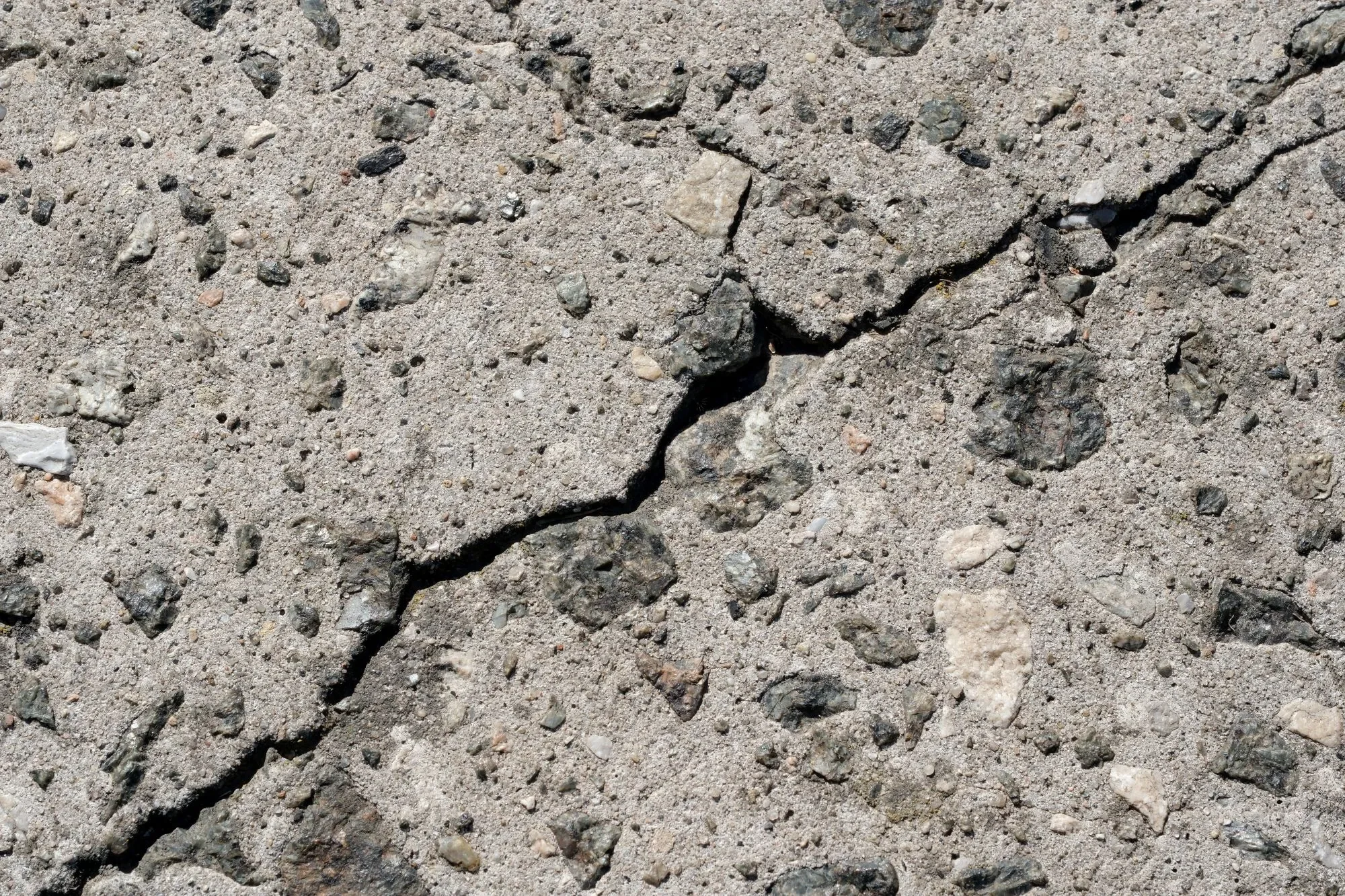
Concrete step repair vs replacement depends on the extent of the damage, the stability of the existing structure, and whether repairs can restore safe access without creating ongoing problems. Cracks, chipped edges, surface deterioration, and uneven steps do not always require replacement, but certain conditions indicate that the concrete or its underlying support is no longer reliable.
The decision involves more than appearance. The location of the damage, movement beneath the steps, drainage conditions, and the remaining strength of the concrete all influence which approach makes sense. Aurum Concrete provides concrete step repair and restoration services in Edmonton, helping property owners determine when existing steps can be preserved and when more extensive work is necessary.
When Damaged Concrete Steps Become a Safety Issue
Damaged concrete steps become a safety concern when deterioration changes the walking surface, affects stair dimensions, or compromises the support beneath a person's weight. Even relatively small defects deserve attention when they occur along the front edge of a step, where people place their feet while climbing or descending.
Common warning signs include missing sections along the step edge, uneven tread surfaces, movement underfoot, and cracks that allow individual sections to shift. Surface deterioration can also create irregular footing, particularly when loose concrete, snow, or ice accumulates.
The seriousness of the damage depends on its location and effect on the stairs. A shallow chip near the side of a stable step presents a different risk than a broken front edge that reduces usable footing. Similarly, a cosmetic crack does not present the same concern as a crack separating two moving sections.
Steps that visibly shift, rock, or have substantial unsupported sections should not remain in regular use until their stability has been assessed. Where safe access cannot be maintained, an alternative entrance or temporary access restriction may be necessary.
Signs Concrete Steps Can Be Repaired
Concrete steps are generally good repair candidates when damage is localized, the surrounding material remains structurally sound, and the original step dimensions can be restored. The appropriate method depends on whether the problem involves surface deterioration, cracking, or missing concrete.
Surface Spalling or Chipping
Surface scaling occurs when thin layers of concrete flake or peel away, while spalling can involve deeper sections breaking off and exposing aggregate or embedded reinforcement. Both conditions indicate deterioration, but the depth and extent of material loss determine whether a surface repair will be sufficient.
Shallow scaling and localized spalling can often be repaired by removing deteriorated material and applying a compatible concrete repair system. Resurfacing may be appropriate when deterioration affects a larger portion of the walking surface but the concrete beneath remains solid enough to support the new material.
Deeper spalling requires closer assessment because damaged concrete may extend beneath the visible surface. Where reinforcement is exposed or substantial sections have lost their integrity, a surface coating alone will not restore the affected structure.
A properly installed repair can provide lasting protection, but its durability depends on the condition of the underlying concrete, preparation, material selection, and continued exposure to moisture. If the deterioration is caused by an unresolved condition, such as persistent water accumulation, the repaired surface may deteriorate again.
Minor Cracks With Stable Structure
Minor cracks are often repairable when the concrete remains stable, the crack is not actively widening, and both sides maintain their original alignment. Suitable crack repair materials can help limit water penetration and protect the surrounding concrete from additional deterioration.
The cause matters because sealing a crack does not correct movement beneath the structure. A crack that repeatedly reopens, grows wider, or develops vertical displacement requires further investigation before selecting a repair method.
Crack width alone does not establish whether a step is structurally sound. Its depth, location, progression, and relationship to other damage provide a more reliable basis for determining whether repair is appropriate.
Localized Edge Damage
Broken corners and chipped step edges can often be rebuilt when the remaining concrete provides adequate support for a bonded repair. Smaller defects may require localized patching, while larger missing sections may need formwork to restore the original shape.
The repair must recreate a stable walking edge rather than simply fill the missing area. Material selection, bonding, and curing are especially important along exposed corners, where impact and foot traffic concentrate stress.
When damage leaves insufficient sound concrete for a reliable bond or extends into a substantial portion of the step, replacing the affected section may be more appropriate than attempting a larger patch. The feasibility of partial replacement depends on how the step was constructed and whether the damaged portion can be removed without compromising adjacent concrete.
Signs Concrete Steps Should Be Replaced
Replacement becomes the stronger option when deterioration affects the structural integrity of the steps, repairs cannot reliably restore safe stair dimensions, or the existing concrete no longer provides a suitable foundation for restoration. In some cases, replacing individual components is sufficient, while more extensive deterioration may justify rebuilding the entire staircase.
Sinking or Separation From the Entrance
Concrete steps can sink when supporting soil settles, erodes, or loses its ability to support the structure. Movement may create a gap between the steps and the entrance landing, change the height of the first or last step, or cause the structure to tilt.
However, not every visible gap indicates structural movement. Some stair assemblies are intentionally separated from the building by construction or isolation joints, so a stable, original joint should not automatically be treated as evidence of settlement. New separation, widening gaps, or vertical displacement are more meaningful warning signs.
Steps may also move because of frost heave, which occurs when freezing conditions cause susceptible, moisture-bearing soil to expand upward through ice formation. Unlike permanent settlement, frost-related movement may change seasonally, making it important to establish whether the structure is sinking, lifting, or experiencing both conditions at different times.
Movement can also affect drainage when the steps tilt toward the building, directing rainwater and melting snow toward the entrance. Water entering the supporting soil may contribute to further erosion, settlement, or frost-related movement.
Not every displaced staircase requires demolition. Concrete lifting or leveling may be appropriate when the structure remains intact, the supporting conditions can be corrected, and the steps can be repositioned without damaging their connections.
The construction method is an important limitation because freestanding, precast, and structurally attached steps do not respond to lifting in the same way. Steps connected to the building or integrated with adjacent concrete may require a different repair approach, while severe cracking or inadequate support can make replacement the more reliable option.
Uneven Risers or Loose Sections
Risers are the vertical portions between successive walking surfaces. When their heights become inconsistent, people must adjust their stride unexpectedly, increasing the risk of tripping or losing balance.
Uneven risers can develop through settlement, deterioration, or incorrect initial construction. Identifying the cause is important because leveling an entire staircase may correct its position relative to the entrance without correcting inconsistent heights between individual steps.
Minor irregularities caused by surface wear may be correctable through localized restoration. Substantial differences built into the original staircase may require reconstruction because adding material to one tread can create new dimensional problems elsewhere.
Loose sections present another concern because individual steps or large portions of concrete may no longer provide stable support. Patching visible joints does not necessarily reconnect separated material or restore the strength of the original structure.
Replacement is often justified when the existing stair geometry cannot be corrected through practical repairs. Rebuilding may provide a more reliable way to establish consistent riser heights and stable walking surfaces when several sections are affected.
Widespread Freeze-Thaw Damage
Repeated freezing and thawing can progressively weaken concrete when moisture enters pores, cracks, and previously damaged surfaces. Over time, deterioration may extend beyond the outer surface and affect the integrity of multiple steps.
Replacement becomes more practical when large sections are crumbling, deep deterioration affects several treads or risers, or previous repairs repeatedly fail because the surrounding concrete continues to break apart.
The visible surface does not always reveal the full extent of deterioration. Removing damaged material may expose deeper cracking, weakened concrete, or corrosion of embedded reinforcement where present.
If extensive removal would be necessary throughout the staircase, replacement may offer better long-term value than reconstructing multiple weakened sections individually. The decision depends on how much sound concrete remains and whether the restored portions would have adequate support.
Step Repair vs Replacement Decision Guide
Choosing between concrete step repair and replacement requires comparing the work needed to restore the existing structure against the cost and expected durability of rebuilding it. The following conditions provide a practical basis for evaluating the options.
Surface damage: Repair is generally preferable when deterioration is shallow and removal of damaged material leaves a stable concrete surface. Replacement becomes more appropriate when deterioration is deep enough that extensive reconstruction would be required across multiple steps.
Cracking: Stable cracks can often be repaired when the surrounding concrete remains aligned and properly supported. Active cracks associated with movement require the underlying cause to be addressed before repair can be considered reliable.
Sinking or uneven steps: Leveling may be practical when the existing staircase is structurally intact and its construction allows repositioning. Replacement becomes more appropriate when the support system has failed or the original stair dimensions cannot be corrected through leveling.
Broken sections: Localized reconstruction is reasonable when the remaining concrete can support the repaired area. Replacement becomes the stronger choice when removing deteriorated material would leave too little sound concrete to maintain the structure.
Cost and remaining service life: Repair generally involves less work when damage is limited to a few areas, but the initial savings may be reduced by extensive preparation, repeated repairs, or additional structural corrections. Replacement may provide better long-term value when the existing concrete has widespread deterioration and limited remaining serviceability.
The final comparison should account for the complete repair scope rather than the cost of patching visible damage alone. An estimate that excludes necessary support corrections or other underlying problems may not reflect the actual cost of preserving the existing steps.
How Edmonton Weather Affects Concrete Steps
Edmonton's freezing temperatures, snow accumulation, and seasonal thaw periods expose exterior concrete steps to repeated moisture and temperature changes. Water that enters existing cracks or porous concrete can freeze and contribute to progressive deterioration, particularly when the material is already weakened.
De-icing chemicals can increase the risk of surface scaling, especially on concrete that is already deteriorating or has not developed adequate resistance to winter exposure. Removing accumulated snow, using traction sand where appropriate, and limiting unnecessary de-icer applications can help reduce additional damage.
The timing of repairs also matters. Concrete repair materials require suitable temperatures and curing conditions to develop their intended properties. Some repair systems are formulated for cooler conditions, while conventional cement-based repairs and new concrete placement may require heating, insulation, or other cold-weather protection.
Completing necessary repairs before winter is generally preferable when conditions allow proper preparation and curing. However, unsafe steps should not be left unaddressed simply because temperatures have dropped. Temporary safety measures or an appropriate cold-weather repair may be necessary until permanent restoration is practical.
Spring can provide an opportunity to assess damage after snow and ice have cleared, especially where seasonal ground movement makes the extent of displacement difficult to determine. The appropriate schedule depends on the urgency of the defect, the selected repair method, and the conditions required for installation.
Planning a Safer Entrance Repair
Planning begins with examining the entire stair assembly rather than only the most visible defect. The assessment should establish whether the steps are adequately supported, whether movement is continuing, and how the proposed work will affect access to the building.
Measurements should include riser heights, tread dimensions, landing elevations, and the relationship between the upper step and entrance threshold. Even localized repairs that alter stair dimensions or configuration should be checked against applicable building requirements, since adding material to one surface can create an inconsistent rise or reduce usable tread depth.
More extensive reconstruction may involve additional requirements related to landings, handrails, and permits. These considerations should be established before work begins rather than addressed after the new concrete has been placed.
Water management is equally important. The completed entrance should direct surface water away from the building and avoid creating areas where moisture collects against the steps or doorway. Where drainage or supporting soil conditions contributed to the original damage, those issues should be addressed as part of the repair plan.
Existing handrails and their attachment points should also be assessed when work affects the concrete supporting them. A repair that restores the walking surface but leaves an unstable handrail does not fully address entrance safety.
Access restrictions during construction must also be considered. Fresh concrete and repair materials require adequate curing before regular foot traffic resumes, and some repairs may involve additional time before exposure to freezing conditions or de-icing chemicals is appropriate.
The project schedule should account for those restrictions, particularly when the staircase provides the property's primary entrance. Where another entrance is unavailable, temporary access arrangements may influence the repair method or construction schedule.
Concrete Step Repair From Aurum Concrete
Aurum Concrete provides concrete repair and restoration services for residential and commercial properties in Edmonton. Our work includes repairing cracks, restoring deteriorated surfaces, rebuilding damaged concrete, and addressing uneven or settling steps where suitable repair methods are available.
Our concrete step repair services in Edmonton involve evaluating the existing structure and selecting an appropriate method based on the extent of the damage. Depending on the condition of the steps, the work may involve localized patching, resurfacing, leveling, or replacing damaged sections.
When the existing concrete remains sound, preserving the structure can avoid unnecessary demolition and reconstruction. Where deterioration or movement makes repairs unreliable, more extensive replacement may be necessary to restore safe access.
Aurum Concrete can assess damaged entrance steps and determine which repair methods are appropriate for their condition. Property owners in Edmonton can request an assessment and quote to compare the practical scope of restoration against the work required for replacement.